For birdwatchers, fast and reliable information is an essential part of the hobby. When a rare bird is spotted, the information is expected to be shared with others immediately and as accurately as possible. The association’s rules may even make reporting an observation an obligation.
Lintutiedotus (Bird Alerts) is a mobile application designed for birdwatchers that enables observations of rare birds to be quickly shared with other users together with their location. The first version of the system was probably the so-called “Piippari”, a messaging service operating on YLE’s nationwide paging network. When the paging technology was phased out, Lintutiedotus was implemented as a text message and web application in 2001. Today, the service operates as an Android and iOS application combined with a web platform.
The application was developed to transmit observation data between enthusiasts in real time in a way that best serves its purpose. At the same time, it illustrates how observations of moving targets can be recorded and monitored.
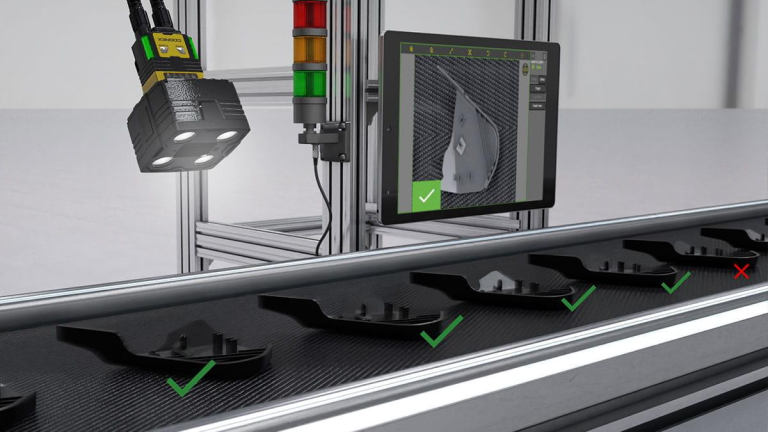
Santa Margarita develops machine vision-based solutions in which events on production lines are continuously monitored and interpreted. The operating environment is different, but the underlying logic is the same: an observation is made, information is transmitted and a decision is made based on that information.
An observation becomes information – and information becomes action
Since the early 2000s, the development of Lintutiedotus has been guided by Bongariliitto ry, and its objective has been fast and reliable information sharing.
The value of the application does not arise from the observation alone, but from the fact that the observation leads to action. An observation occurs at a specific place and time, the information is quickly transmitted to others, and action can be taken based on it.
The same principle applies in industrial production: an observation is useful only when it guides action.
A complete picture emerges from multiple observations
In Lintutiedotus, individual observations sometimes form a chain that makes it possible to follow the movement of a bird from one location to another. As observations accumulate from multiple sources, a continuously updated situational picture emerges.
In an industrial environment, the logic is exactly the same. Information is generated at different stages of a process, and the overall picture is formed when observations are combined. In Santa Margarita’s solutions, measurement and image data from the production line together provide a real-time view of the state of the process.
Early information determines the outcome
In birdwatching, speed is critical: delayed information may mean a missed opportunity or an unnecessary journey to the observation site. In industrial production, the impact is reflected in process efficiency and the quality of the end result. This is clearly visible in Santa Margarita’s solutions.
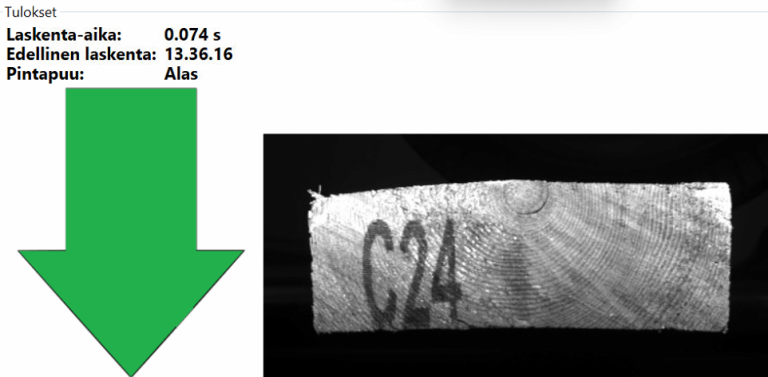
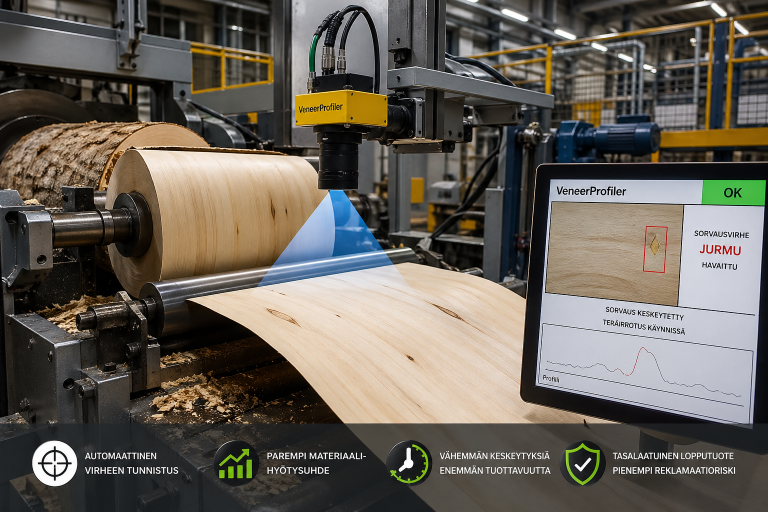
The VeneerProfiler camera reacts immediately when a peeling defect occurs. ScarfMonitor detects deviations before veneers proceed further in the process, and board turning control ensures that material is correctly oriented for the next stage of production. When an observation is made early, its impact extends throughout the entire production chain.
More than birds can move through the airspace
Recently, attention has also turned to other objects moving across borders. In addition to birds, the airspace may contain unmanned devices, for example.
Whether the subject is a bird, a drone or material moving along a production line, the fundamental questions remain the same: what is being observed, where and when is it observed, how is the information transmitted, and how is action taken based on it? Lintutiedotus makes this visible from the perspective of birdwatching. In Santa Margarita’s solutions, the same logic is applied in an industrial environment.
More than a single observation
Lintutiedotus is not merely an application. It is a way of creating a situational picture from scattered observations. Its value lies in the fact that information moves quickly and can be utilised immediately.
The same way of thinking is also central to industrial machine vision. Ultimately, the question is how to make visible what would otherwise be difficult to detect – and how to turn that information into action.