Plywood production typically begins with veneer peeling. Even at this early stage, an average of about two percent of the birch raw material is lost due to peeling defects, and occasionally, the material loss can rise significantly higher.
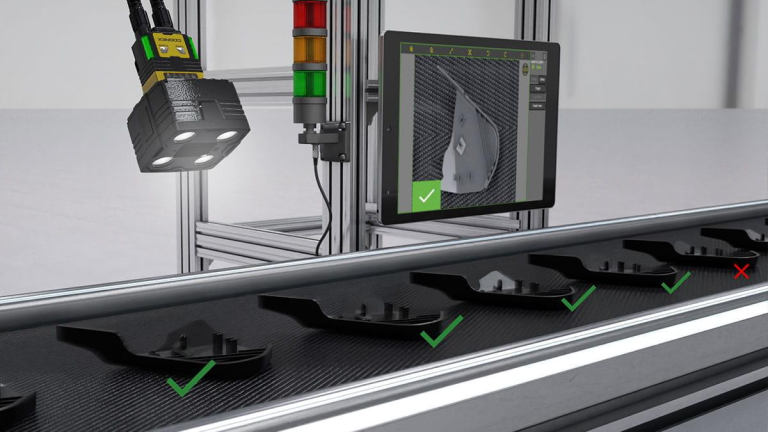
To reduce these losses caused by peeling defects, the VeneerProfiler system has been developed. The system monitors the integrity of the veneer ribbon and automatically instructs the peeling process to stop when defects are detected. Using machine vision, it analyses the surface of the veneer ribbon and identifies peeling defects based on the veneer profile and surface characteristics. The solution combines measurement-based machine vision with AI-driven analysis.
Why detecting defects is challenging
The lathe operator’s work requires continuous monitoring of several processes simultaneously. Subtle peeling defects are often difficult to detect from the operator’s workstation. Modern peeling lathes operate at high speed, and peeling a single log typically takes only a few seconds. If a defect goes unnoticed, the entire log may be lost.
If a peeling defect splits the veneer, it is usually detected quickly, and the veneer is removed from production. Another common defect type is the longitudinal stripe (“jurmu”). This defect may go unnoticed by the operator, resulting in unnecessary processing time and machine capacity wasted on defective material. Ultimately, the veneer may be rejected during lay-up, or the defect may even weaken the strength and value of the final product, the plywood panel.
Machine vision detects the defect immediately
The VeneerProfiler camera identifies peeling defects within just a few metres in the production line. A detection signal is instantly transmitted to the lathe automation system, which temporarily stops the peeling process. After blade retraction, the cause of the defect is released, and veneer peeling can continue normally.
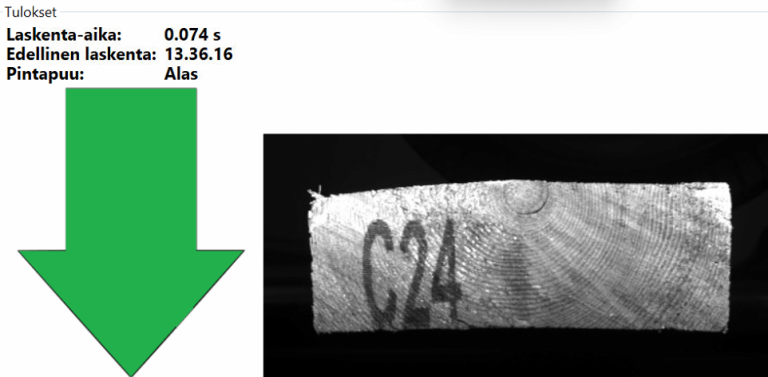
The operator can view the detected defect on the camera display. Although the brief interruption slightly reduces time efficiency, the improvement in material efficiency is significant.
Benefits throughout the entire production chain
Automatic quality control affects the entire plywood manufacturing process. Traditionally, some defects may go unnoticed or are detected only at later stages of production, when costs have already increased.
Peeling defects, especially veneer stripe, “jurmu” defects, are often removed in later processing stages, which frequently involves manual work. During scarf cutting, a “jurmu” located at the end of the veneer may break apart, causing the veneer sheet to be rejected due to a scarf defect. A defective veneer may also end up in the final product.
The system simultaneously collects production data and stores images of detected defects. Data analysis can reveal changes in the occurrence of peeling defects and help identify their root causes.
The VeneerProfiler camera reduces material waste and increases production capacity. At the same time, the consistency of the final product improves, and customer complaints decrease.
More than a single inspection system
Installed at the beginning of the production line, the jurmu camera influences the entire plywood manufacturing process. Raw material waste decreases, machine capacity is freed up, and operator workload is reduced. The result is a more efficient and proactive production process.
Automatic monitoring of peeling defects not only reduces errors but also supports the continuous development of the mill. Together with Santa Margarita’s ScarfMonitor system, the VeneerProfiler camera forms a solution that helps ensure defect-free plywood production.
For more information about the jurmu camera: