Introducing machine vision to production may feel like a major investment, but there is no need to start with a complete, production-ready system. A pilot project makes it possible to focus on a single application and test how well machine vision can solve the problem in practice. At the same time, the pilot provides valuable insight into what the final production solution should look like.
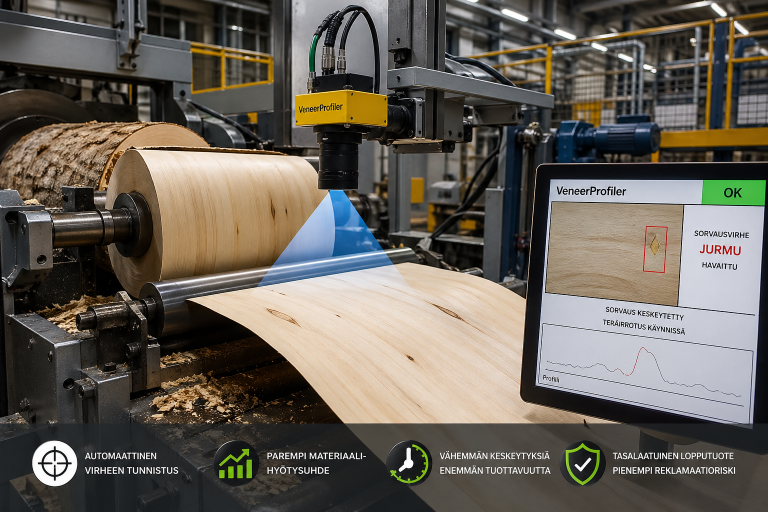
A production environment may have a clear need that could potentially be addressed with machine vision, even if the right technology or implementation is not yet known. The challenge could involve quality inspection, measurement, identifying material properties, or controlling a production process.
In these situations, a pilot project provides an opportunity to test the solution before committing to a larger-scale implementation. At Santa Margarita, the suitability of a machine vision system for a specific quality inspection application can often be tested and verified through a pilot project.
Determine what the camera needs to see
A machine vision system relies on capturing sufficiently high-quality information that is relevant to the application. That is why a pilot project is not simply about testing a camera or software.
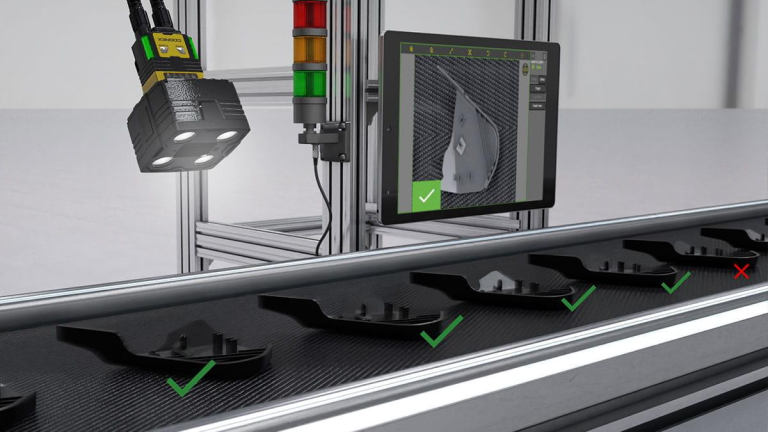
The imaging setup is a key part of the solution. Depending on the application, the right camera, optics and lighting are selected, and their positioning is determined. In an industrial environment, factors such as the movement, size and characteristics of the object being inspected, as well as the conditions on the production line, can all affect what kind of solution will work in practice.
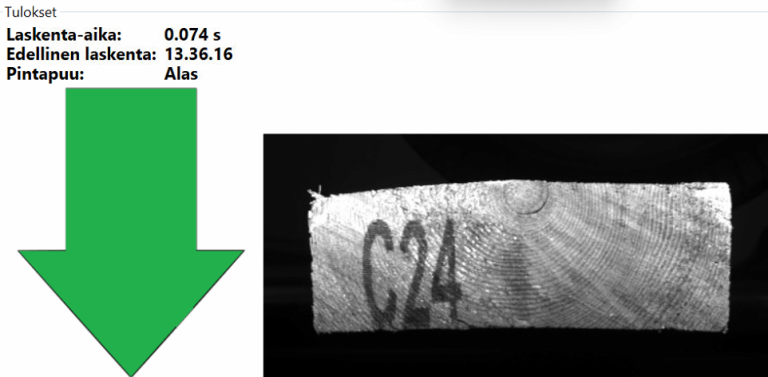
A pilot can determine whether the specific feature or deviation that needs to be monitored can actually be detected. It can also be used to test what kind of imaging setup is required to detect it reliably and how the resulting image data can be analyzed.
This reduces uncertainty before the actual system is built. Instead of designing the entire solution based on assumptions, its performance can first be evaluated in a real application and on a limited scale.
The pilot can be limited to part of the production line
Santa Margarita’s machine vision and measurement systems are built on the company’s StM Measuring Core development platform. It includes ready-made methods for implementing different imaging and measurement setups, as well as tools for analyzing and processing the resulting data.
The platform is scalable both in terms of the hardware that can be connected to it and its processing capabilities. This makes it possible to run a pilot on a smaller scale than the final production system. For example, on a wide production line, a pilot can be implemented using only part of the line’s full width.
This makes it possible to evaluate the solution without immediately equipping the entire production environment with the final system. Thanks to Santa Margarita’s own hardware portfolio and cooperation with camera and lighting suppliers, pilot projects can in many cases also be carried out without significant hardware costs.
From pilot project to the final solution
The value of a successful pilot goes beyond simply finding out whether the desired detection or measurement is possible. A pilot also helps define the objectives and technical requirements of the final system, as well as how the solution should be integrated into the production process.
Santa Margarita’s StM Measuring Core platform includes ready-made interfaces for cameras, analysis and communication. Data generated by the system can be transferred to, for example, factory systems and programmable logic controllers (PLCs). This means that machine vision can provide not only measurement and quality inspection data, but also information that can be used to control the production process.
A pilot project can provide a step-by-step path toward a larger production solution. A system tested on a smaller scale can be scaled according to the needs of the application, so a working solution does not have to be built from scratch every time.
Ready-made and tested software libraries, components and interfaces within Santa Margarita’s development platform speed up the implementation of new systems and reduce development costs.
The starting point for introducing machine vision can therefore be a concrete production need. Once the problem has been clearly defined, the next step is to determine what can be detected or measured with machine vision and what kind of implementation will provide useful, reliable data.
A pilot project makes a potential investment much more concrete. Before moving to a larger-scale implementation, you already have a clearer understanding of what you are building — and what it can actually achieve.